Every project I work on has two halves. One half lives in folders: code in one place, data on an external disk, a manuscript in Documents, a repository on GitHub. The other half lives nowhere in particular: why the project exists, what was decided last Tuesday, which of the four folders is the one that matters, and how I set it up so that the next one can start the same way.
The first half is well served. Finder, Git, editors, cloud drives. The second half ends up in my head, in a note somewhere, or in a README that slowly stops being true. Projects is the app I built for that second half.
What it is
Projects is a native Mac app that keeps, for each project, a short summary, a running log and the references it draws on: folders, files and websites, wherever they live. It never moves, renames or deletes a file. A project can be anything you work on: a website, a book, a talk, a study, a kitchen renovation.
Three things matter most to me:
- Reaching a project should take seconds, from anywhere.
- Starting a new project should not mean rebuilding the last one by hand.
- Nothing about it should depend on an account, a server or a subscription. Everything stays on the Mac.
Quick Access: one shortcut, three verbs
Press ⌃⌥P in any app and Quick Access appears. It deliberately offers only three things: Open a project, Create one from a template, or Customize templates and assets. Typing searches your projects, including their summaries and logs; Return opens the project in the app you use for it, whether that is Finder, VS Code, Xcode or Terminal.
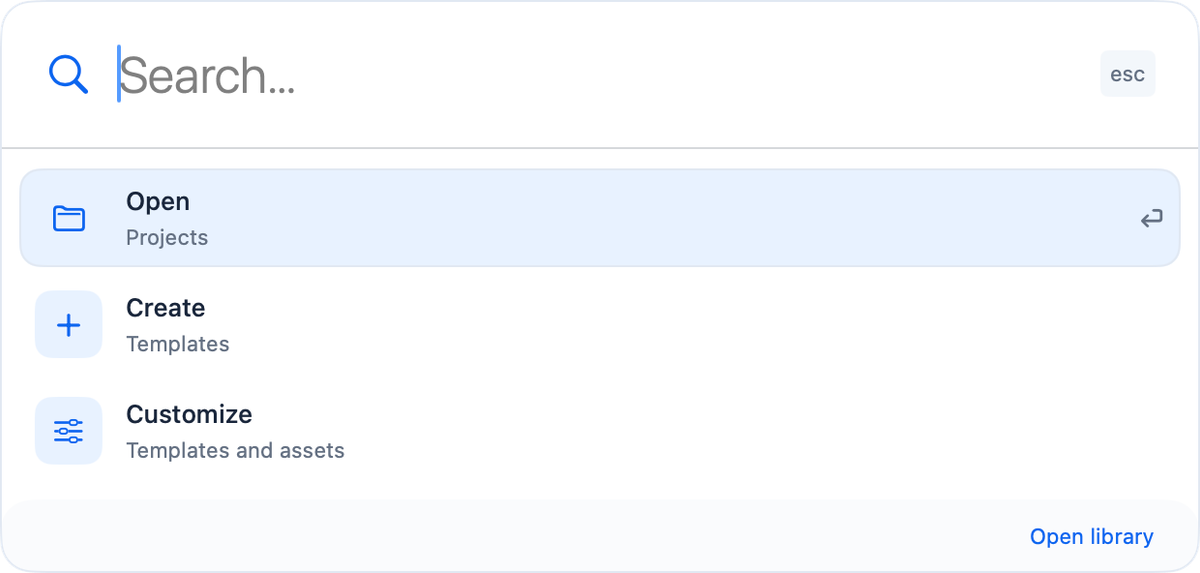
It behaves like Spotlight on purpose: you don't go to the app, it comes to you, and it disappears once you are where you wanted to be.
A project, in one view
The library window shows each project with its summary, its references and its log. The references can point anywhere: the working folder on the internal SSD, a data folder on an external disk, the repository on GitHub, the documentation of a framework. The log is mine alone. The app never writes into it. It understands @people, #tags and links to the project's own folders, so "Originals stay in #content" becomes a link you can click.
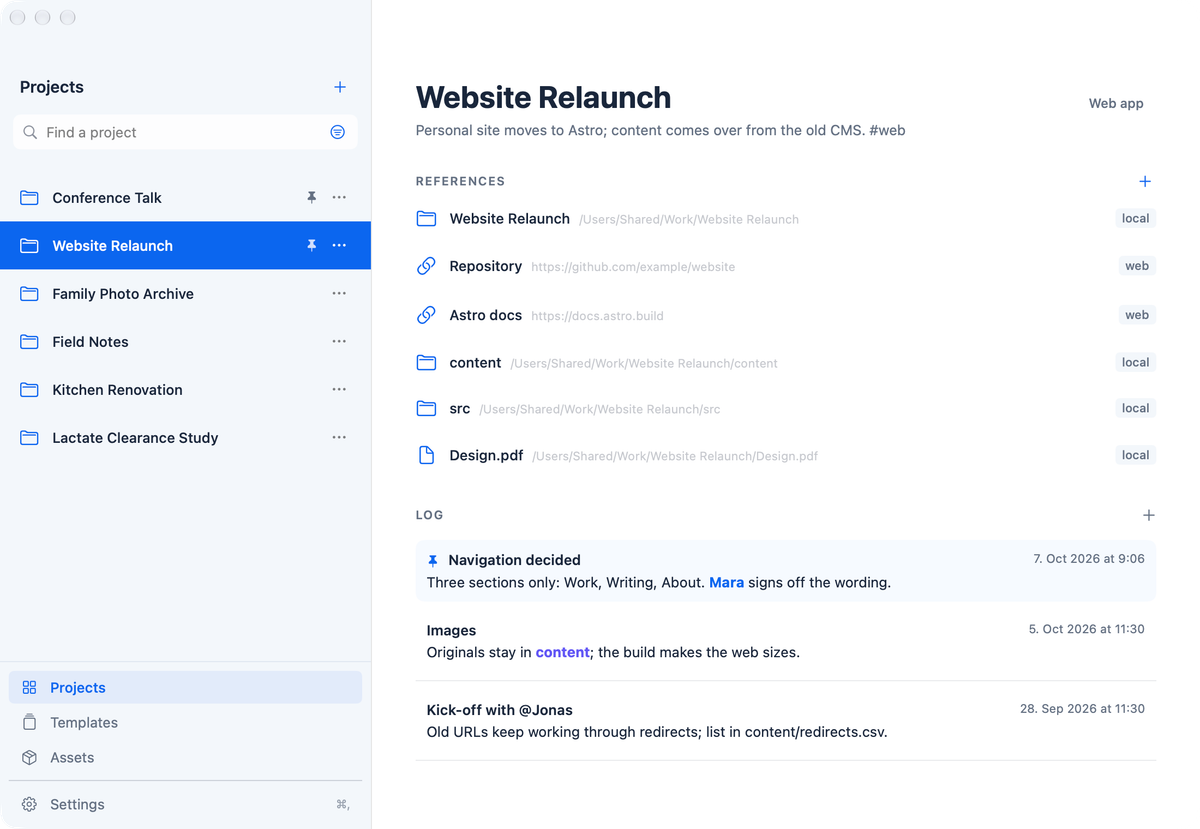
Projects appear in Spotlight, and Shortcuts can open a project, add a log entry, run a project command or create a new project. A project can be exported as a Markdown or Obsidian note whenever its context should travel.
Templates are recipes, and you see the whole recipe first
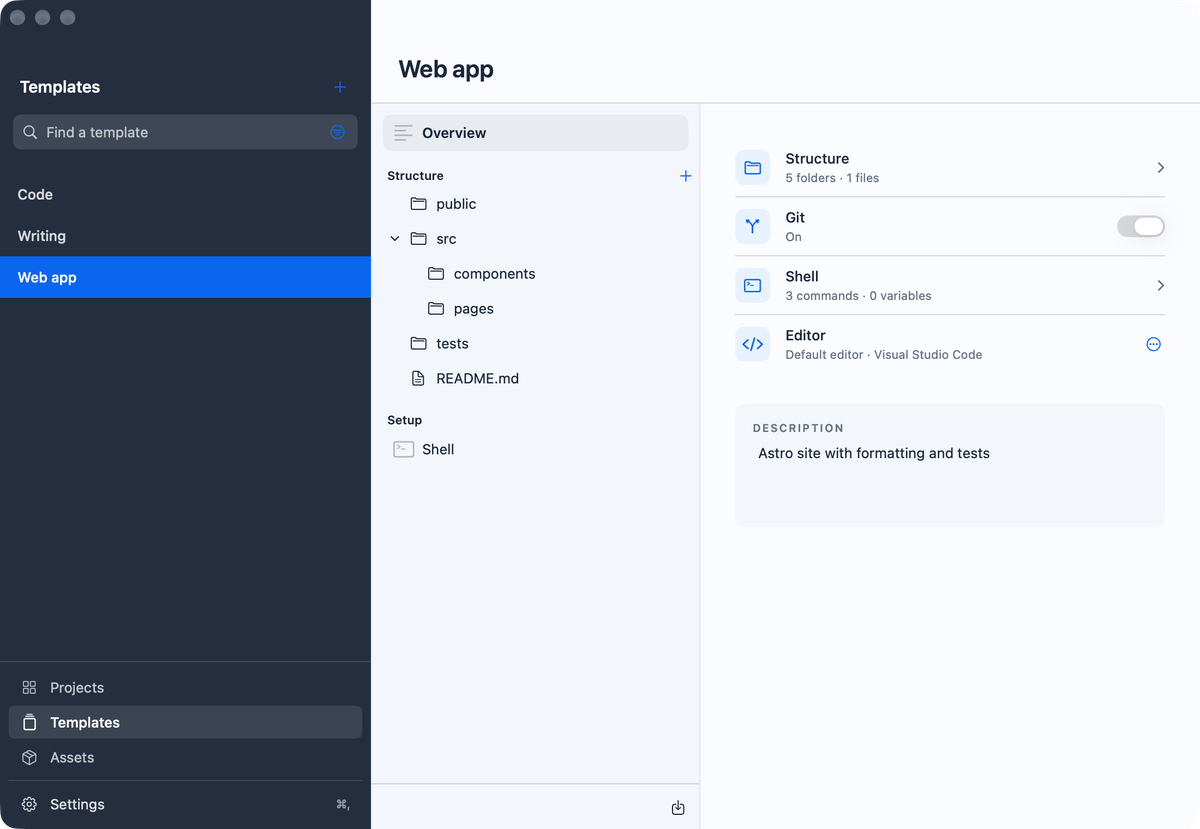
This is the part I use most. A template is a recipe for a new project: a folder structure, a few files, reusable assets such as a .gitignore, a licence or editor settings, an optional Git repository, and, if you want, setup commands. Before anything is created, Quick Access shows you exactly what will happen: every folder, every file, every command, in order.
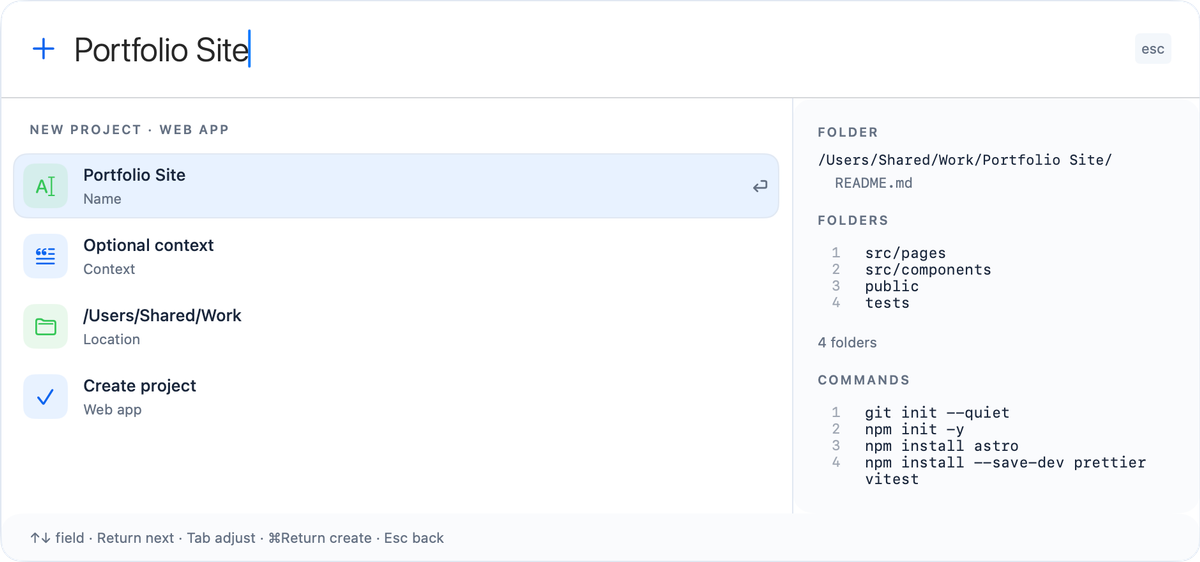
Templates are edited in the same window as everything else. The structure, Git, the setup commands and the editor a new project opens in are all on one page.
Templates and assets can also come from catalogs you choose to follow, such as a GitHub repository or a shared library folder. You pick single items from a catalog instead of installing everything. Updates arrive only when you ask for them, and you review them before they change your library. A command that came from outside is shown to you once before it can ever run, and so is any later change to it.
Start with what you already have
An app like this is worth little until it knows your projects. So the first minute is about the folders you already have. Drag them onto the project list, or add several at once, and each becomes a project. Drop a folder onto an existing project instead, and it is linked there as a reference. A folder that already belongs to a project does not become a second one.
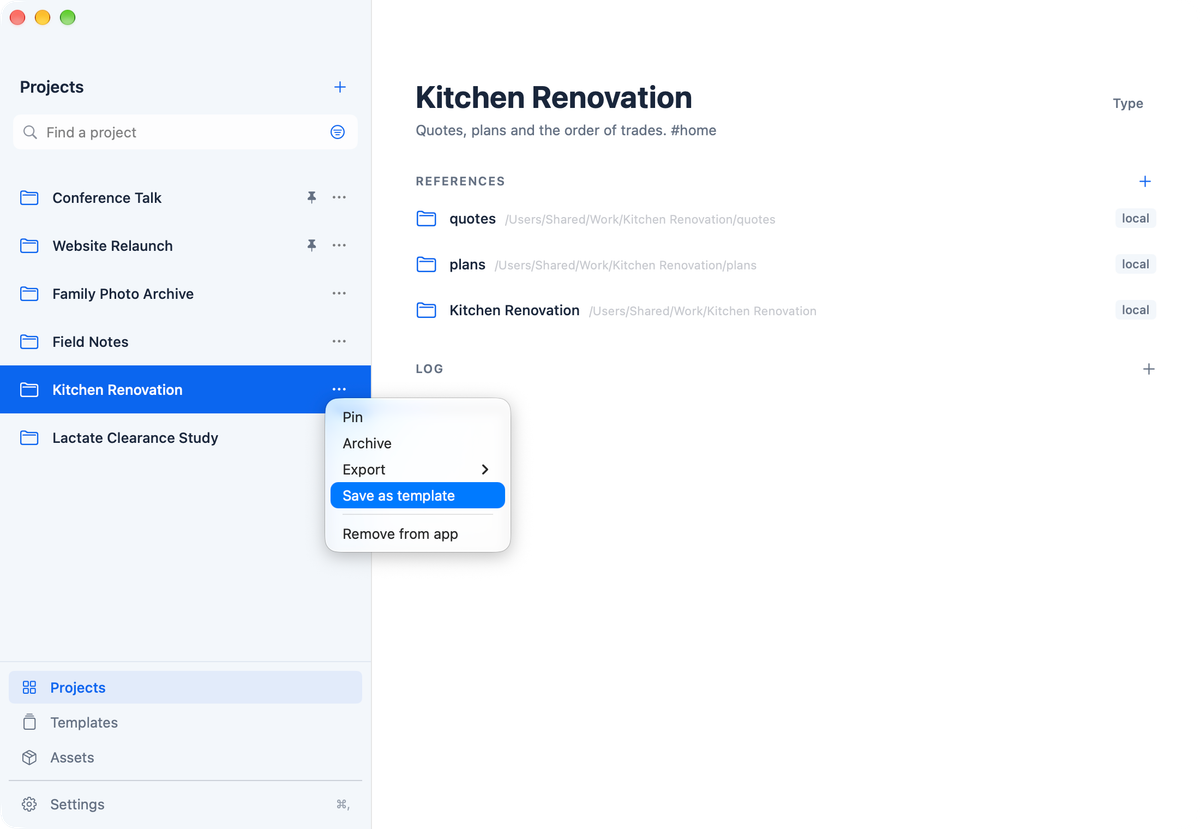
And once a project has a shape you like, Save as template turns its folder layout into a template for the next one. It takes the folders only, not the files, and leaves out what tools generate for themselves, such as node_modules or build output. A project that was made from a template offers to edit that template instead, so a project and its recipe don't drift apart.
Templates and AI
More and more of a project's setup is written by AI assistants. They are fast, but they never build the same project twice. A template is the fixed starting point they can work inside: the decisions that should not vary are made once and applied the same way every time. I wrote about why that matters for reproducible work, especially with clinical data, on medizin.dev. Projects itself contains no AI.
What it is not
Projects is not a task manager, a file manager or a notes app, and it does not sync or share. It is for one person on one Mac. The app speaks English and German; templates and assets can be in either language.
Try it
Projects is in alpha. It works and I use it every day, but its look and behaviour may still change between versions. Your library is backed up daily, and your files are never moved, renamed or deleted. It needs macOS 27 and updates itself through Check for Updates….
Download it from nikolasschrader.com/apps/projects. I'd like to hear what works and what doesn't: projects@nikolasschrader.com.